
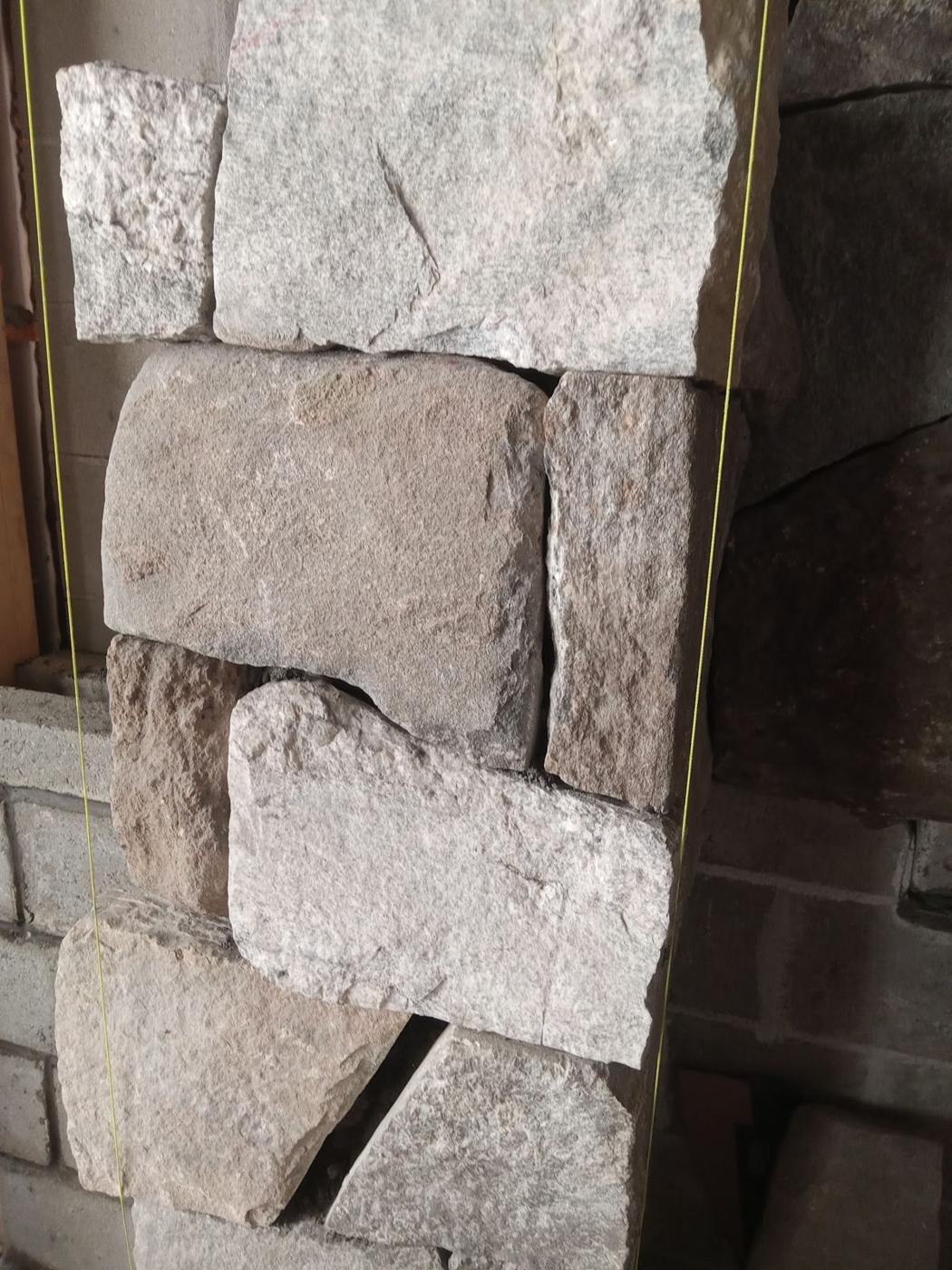
Round fieldstone
This is the stone New Hampshire is full of. Rounded and half rounded stones in grays and browns, with rust streaks and lichen, the same kind piled in old walls along the back roads. As veneer, the faces stay round and the backs get sawn flat.
Round fieldstone suits farmhouses, camps and lake homes that want to look like they've been there a long time. It takes a lot of picking to lay well. Each stone has to sit like it's carrying the one above it, even though on veneer it isn't.
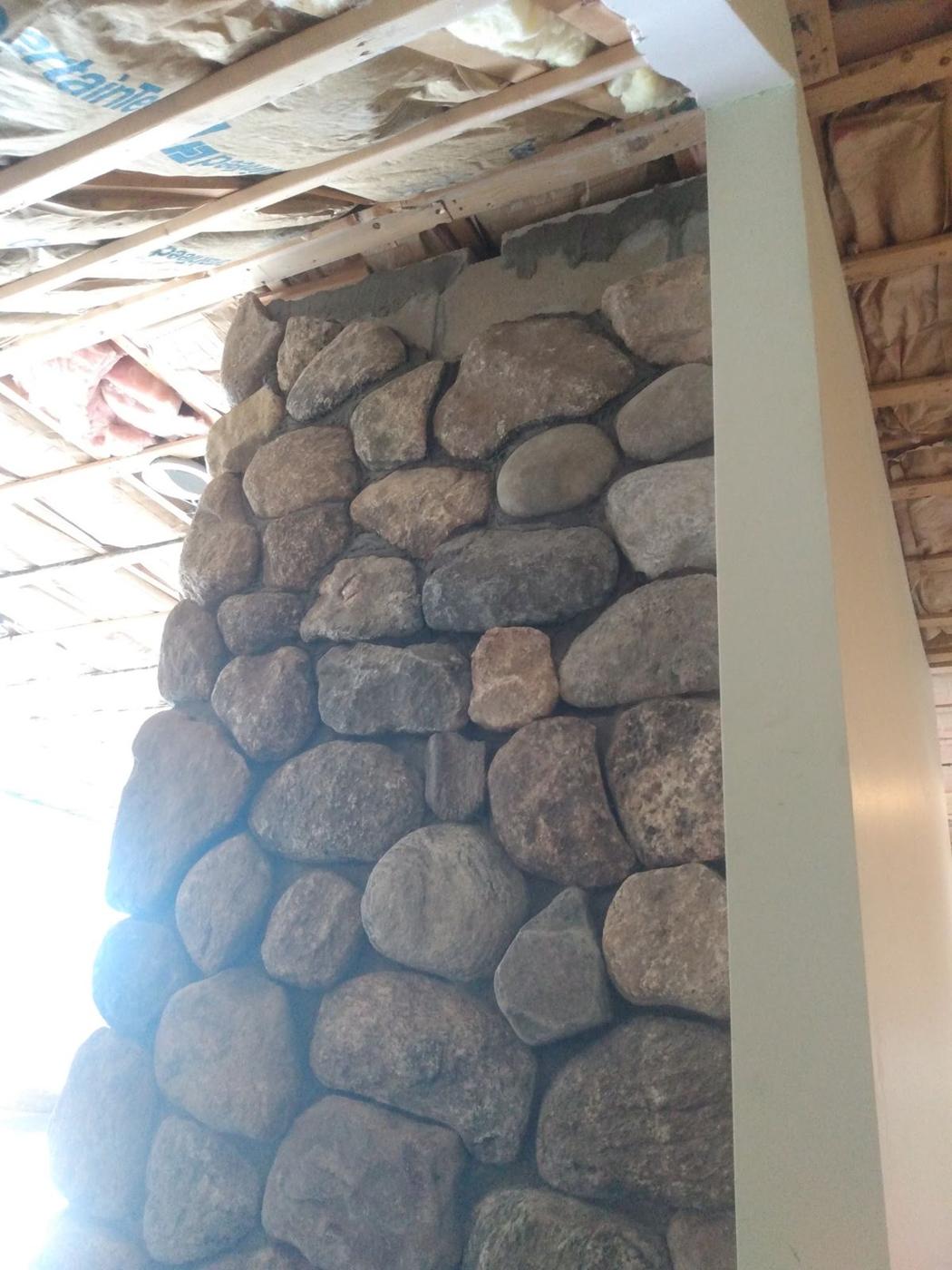
Mosaic and flat fieldstone
Same stone family, different faces. These stones are flatter and more angular, and they fit together like a puzzle with joints running every which way. From the road it reads as a solid stone wall. Up close you can see how much fitting went into it.
Mosaic works on foundations and chimneys where you want texture without big round shapes sticking out from the wall.
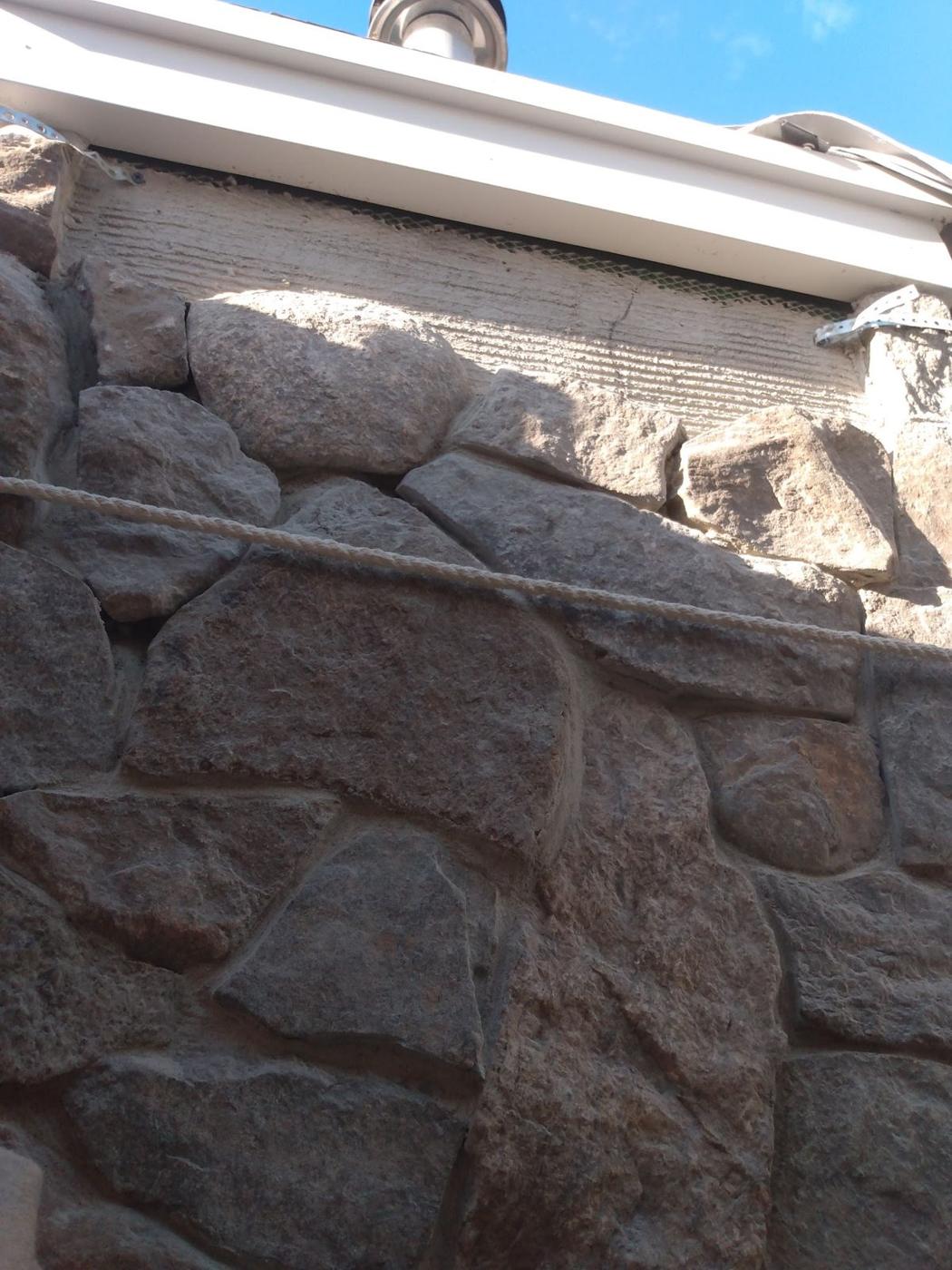
Ledgestone and stacked stone
Ledgestone is long, thin pieces laid in horizontal rows. It throws strong shadow lines and gives a cleaner, more modern look, and you see it a lot on fireplace walls and newer homes.
Most ledgestone goes up with tight joints or none showing at all. That's the dry stack look. Inside, that's fine. Outside, read the part on joints below before you settle on it.
Ledgestone also hides less. Because the rows run long and level, any wobble in a line shows from across the yard, so it gets set to string lines like any other coursed stone.
Ashlar and cut granite
Ashlar is stone cut into squares and rectangles and laid in a planned pattern of a few sizes. The edges are sawn or split, and the face can be split rough or left natural. It looks deliberate and a little formal. Granite ashlar on a foundation or an entry has an old New England look to it.
Ashlar takes careful layout at corners and openings so the pattern lines up instead of ending in odd slivers. That planning happens before the first stone goes on the wall.
The photo at the top of this page shows cut granite going up, with string lines to keep the face true.
River stone
Smooth, rounded stones worn down by water. It's softer and more casual than fieldstone, and it often shows up as an accent rather than a whole wall. Very round stone is harder to set tight, so the joints tend to show more.
A whole wall of river stone can look busy, so it's often paired with a calmer stone, as a hearth, a band near the bottom of a wall, or the face of a column.
Mortar joints change the whole wall
Put the same stone on two walls with different joints and they'll look like two different jobs. The common choices:
- Tooled or flush: joints packed and smoothed, even with the stone edges or a little behind them
- Raked or recessed: mortar pulled back so each stone stands out with a shadow around it
- Overgrout: wide mortar brushed out over the stone edges, the look of an old farmhouse foundation
- Dry stack look: stones fitted tight with the mortar hidden behind, so almost no joint shows
Joints and New Hampshire weather
Outside, the joint is also about water. One stone maker's installation guide says tooled joints resist water better than raked or rough ones, and steers people away from open joint dry stack outdoors where freeze and thaw is common. Water that sits in open gaps freezes there. So on an outdoor wall with a tight look, ask how the joints will be filled.
The easiest way to pick a style is to look around the property. An old foundation, a wall along the road, ledge coming up through the lawn. Stone that matches those tends to look right. Send Kevin a photo of a stone you like, yours or somebody else's, and he can talk through what's close.