
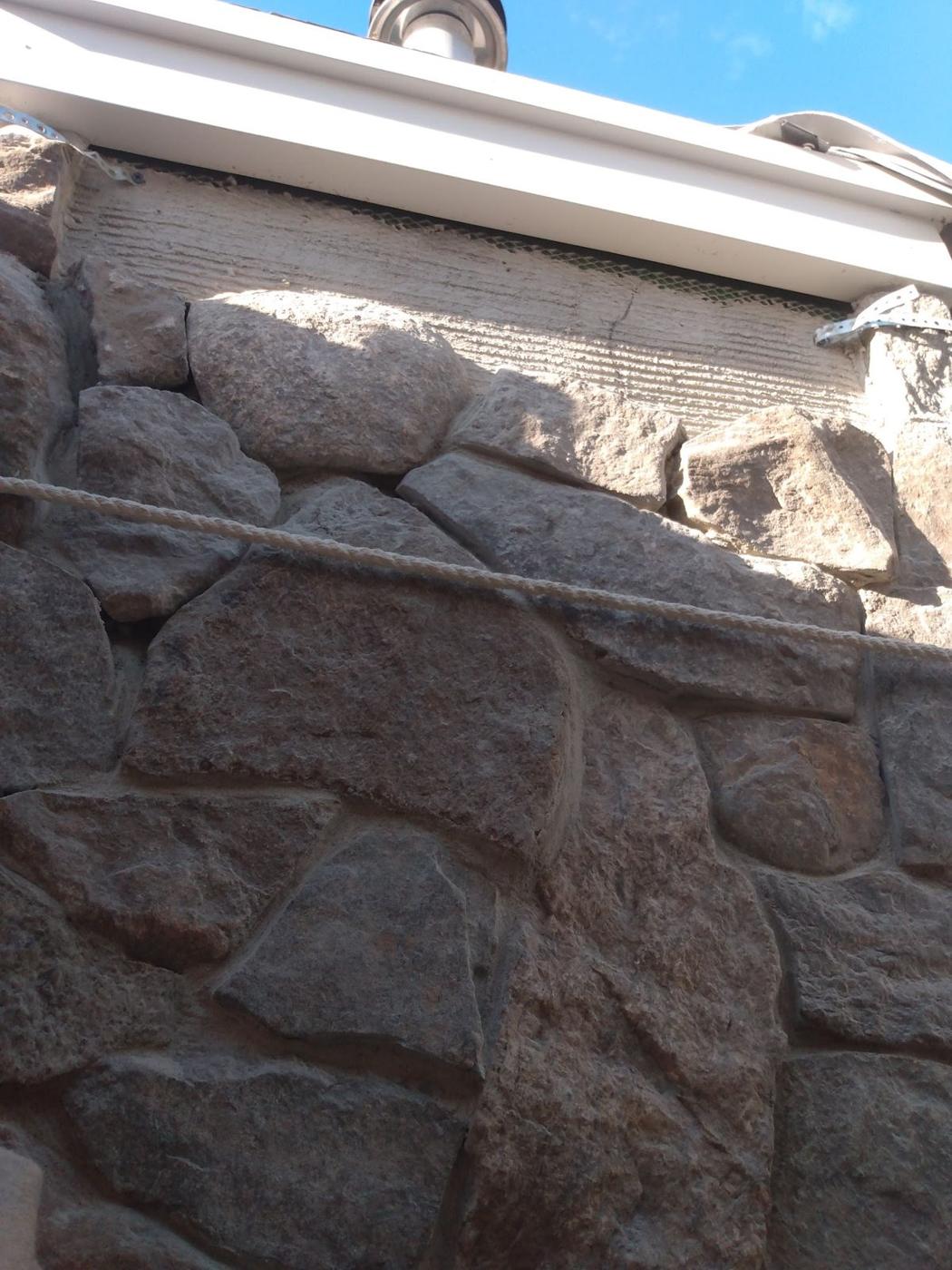
The quick comparison
Both products end up in the same places on a house. Foundations, chimneys, columns, fireplace walls. Both are usually set the same way too, pressed into mortar over metal lath and a scratch coat. The difference is what each piece is made of, and that shows up in color, weight, cut edges and price.
- Natural thin veneer: real stone with its natural face, sawn flat and thin on the back
- Manufactured stone: a concrete mix poured into molds taken from real stones
- Color: through the whole piece in natural stone, mostly at the surface in manufactured
- Weight: manufactured is lighter, which is a big part of why it caught on
- Material cost: manufactured usually costs less per square foot
What each one is made of
Natural thin veneer starts as quarry stone or fieldstone. The pieces get sawn so the back is flat and only about an inch deep, which lets them stick to a wall with mortar instead of standing on a footing. The face stays the way the stone came: split, weathered or rounded. Corners come as separate L shaped pieces cut from the same stone, so an outside corner looks like one full block.
Manufactured stone, also called faux stone, is a concrete product. Makers pour the mix into rubber molds shaped from real stones, then color the pieces with mineral pigments. A good one looks convincing from the driveway. Up close you start to notice the same shapes repeating across the wall, because a product line only has so many molds.
Color, chips and cut edges
This is the biggest practical difference. Natural stone is the same color inside as out. When a mason trims a piece to sit tight against its neighbor, the fresh edge still looks like stone. Chip a corner years later with a snowblower and it still looks like stone.
Manufactured stone gets its color at the surface. Cut a piece or knock a chip off and you can see gray concrete underneath. Installers handle that by turning cut edges into the joints where nobody looks. The color can also lighten over the years in strong sun, and how much depends on the maker. A lake house wall facing south across open water gets a lot of sun.
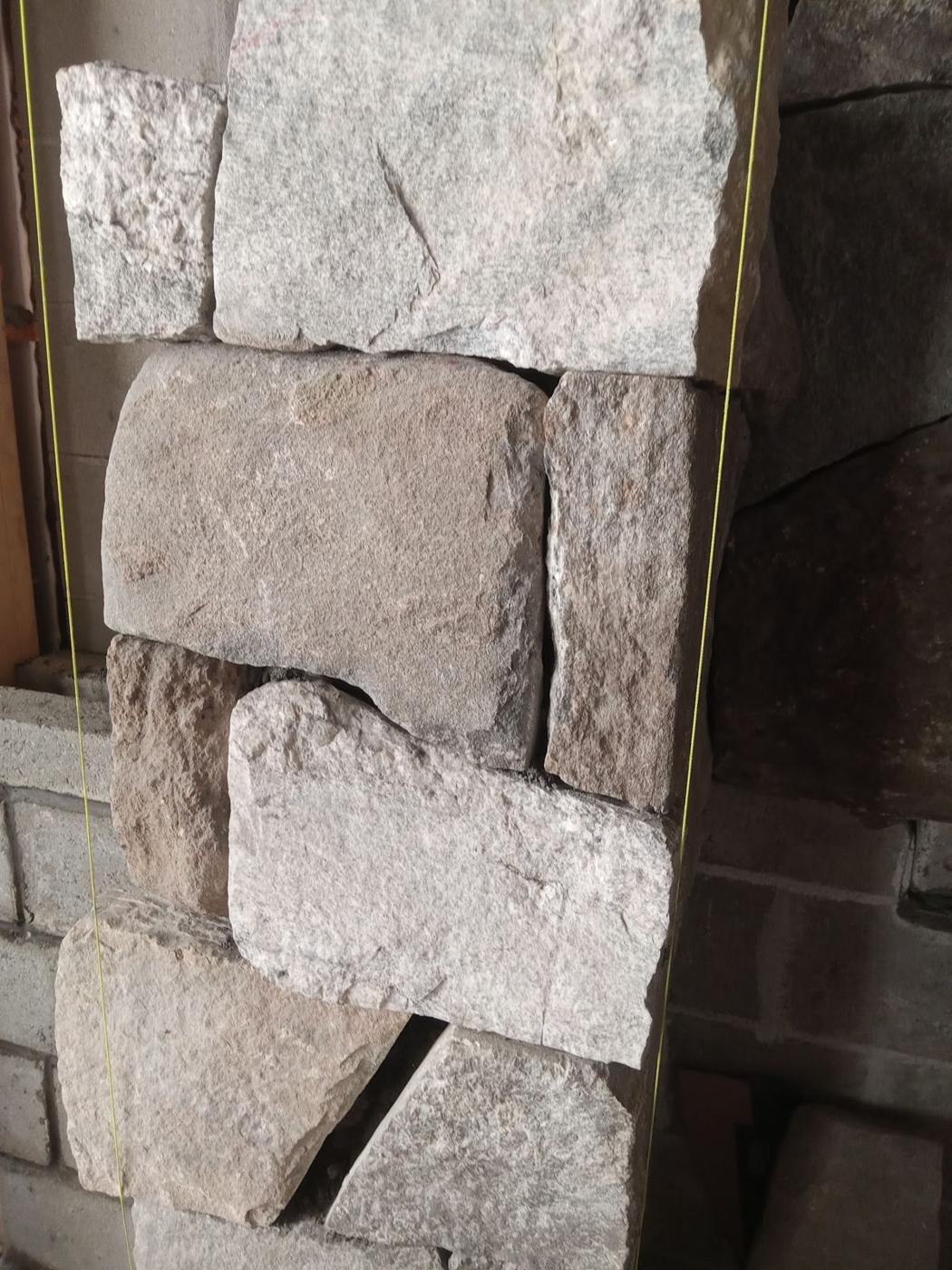
Weight, and what the wall has to carry
Manufactured stone was invented to be light, and it is. Natural thin veneer weighs more, but it's still a fraction of full size building stone, roughly a quarter of the weight by one quarry's figures. That's why either one can go on a house that was never built with a stone ledge on the foundation.
Both still need a sound backing. On a wood framed wall that means a water resistant barrier, lath and a scratch coat. On poured concrete or block that's clean and unsealed, the stone can often go right onto the masonry. Stone thicker than true thin veneer is a different job with a footing and ties, which the guide on thin versus full bed stone covers.
In a New Hampshire winter
Cold alone doesn't wreck stone veneer. Water does. Water that soaks into a stone or a mortar joint and then freezes swells and pushes, and a winter here does that over and over. Dense natural stones like granite take on very little water. Manufactured stone depends on the mix and the maker, so ask for freeze and thaw test results on any product you're looking at.
But with either one, the bigger risk sits behind the stone. If water gets in and can't drain out, it soaks the sheathing and framing for years before anything shows. The fixes are flashing, a drainage path and keeping the bottom of the veneer up off the ground. The winters guide goes through each one.
What drives the price
Manufactured stone usually costs less as material. Natural thin veneer costs more because the stone has to be quarried, sorted and sawn. On the wall, labor depends more on the job than the product: how many corners, how high, how much prep, how tight the joints. And natural stone can be trimmed on site to close up gaps, which takes time and shows in the finished wall.
There's no dollar figure here on purpose. Stone choice, wall size and access move the number too much for a range to mean anything. The cost guide goes through each factor.
Why Kevin works in natural stone
Natural stone veneer is the main thing Jones Legacy does, mostly on higher end homes around the Lakes Region. A lot of those houses sit near old stone walls, ledge and granite that have been on the land forever. Real stone on the foundation or the fireplace matches what's already there.
If you're weighing the two for a specific wall, send Kevin a photo and he can talk through how natural stone would look on it.