
A town full of old stone walls
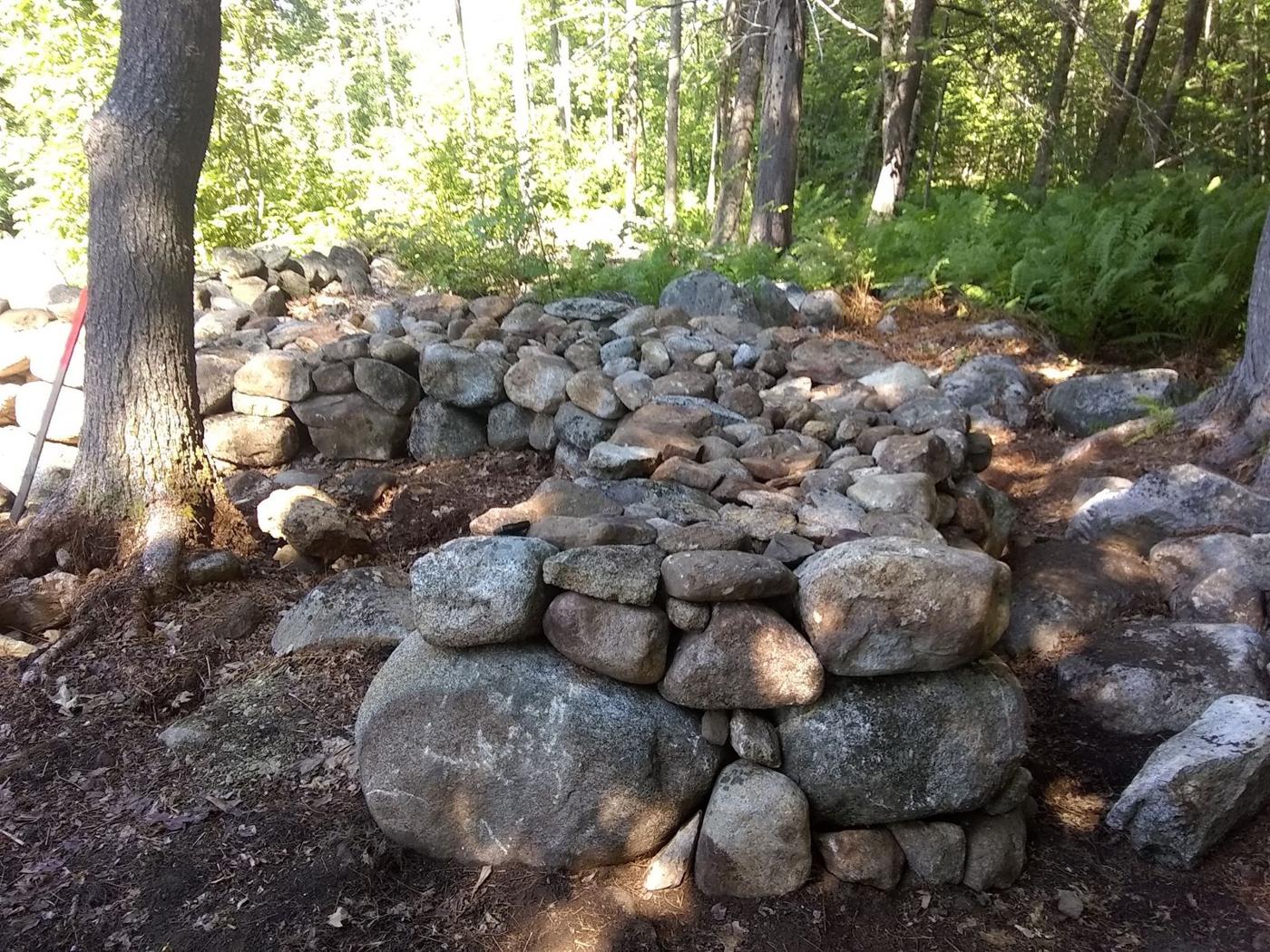
Sandwich was hill farm country, and the walls are still everywhere. Drive Sandwich Notch Road, the one lane gravel road laid out in 1803 from Center Sandwich toward Thornton, and you pass stone walls and cellar holes from farms that once held 30 or 40 families in the Notch.
That old stone sets the standard here. In Sandwich, new stone looks right when it looks like it came off the same land as the walls along the road.
Farmhouses and fieldstone foundations
Many older New Hampshire farmhouses sit on fieldstone or granite foundations, and Sandwich has its share of old houses. When an addition, a garage or a replaced foundation goes in on poured concrete, natural fieldstone veneer can carry the old look across so the new part does not stand out.
And if the original stone foundation is still sound, it may not need veneer at all. Kevin will tell you which one you are looking at.
Stone in Center Sandwich
Center Sandwich is the main village, with its own historic district and the Sandwich Historical Society on Maple Street. The League of New Hampshire Craftsmen got its start here as Sandwich Home Industries, and the Sandwich Fair still comes every October. Handwork gets noticed in a village with that history, and people here know a good stone wall from a bad one. A fieldstone foundation or porch base near the center gets looked at closely, and it should hold up to that.
Squam, the Bearcamp and the mountains
Sandwich runs from the Squam Lake shore in its southwest corner up to Sandwich Dome, at 3,993 feet the highest point in Carroll County. Mount Israel sits near the middle of town, the Bearcamp River runs east toward Maine, and Routes 25, 109 and 113 tie it together.
Homes in North Sandwich and Whiteface sit in mountain country with long winters, and snow will sit against a foundation for months. Kevin keeps the bottom course off the ground and leaves a path for water to drain, so melt does not soak in and freeze behind the stone.
Walls, walkways and paint in Sandwich
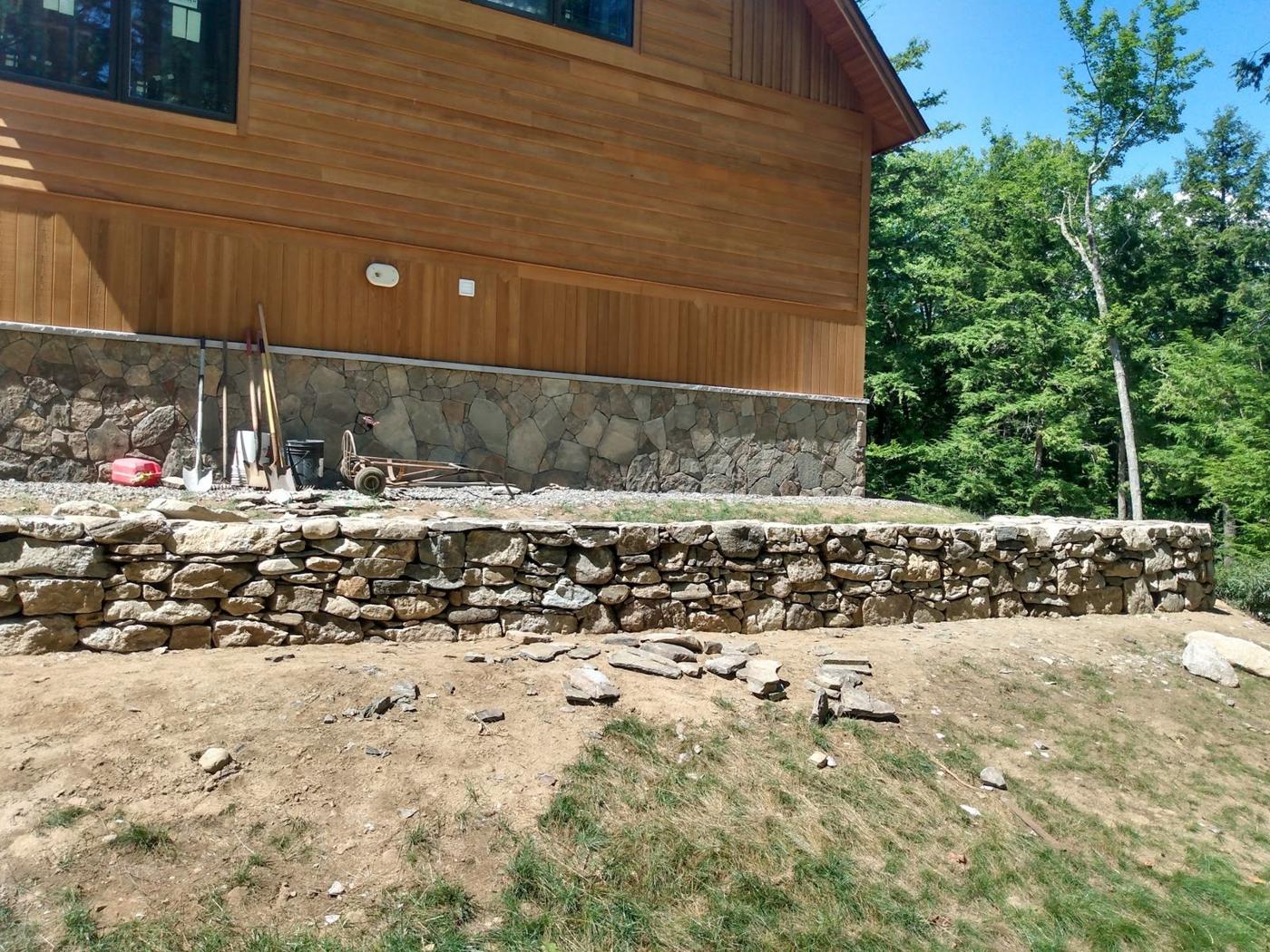
Old walls come down. Frost heaves them, trees grow into them, and a section tips toward the road. Putting those back up is part of the fieldstone work Kevin does, along with new walls, flagstone walkways, steps and patios. He also paints, inside and out.