
Up at 1,171 feet
Jackson village sits at 1,171 feet, and the town climbs from there to Wildcat Ridge, its high point at 3,870 feet, on the northern line. The Ellis River runs through the village and Wildcat Brook comes down to meet it.
That height means more snow and a longer winter than the towns down by the lakes. Stone veneer here has to be built for that before anything else.
Snow off the roof, water down the wall
Steep roofs on Jackson houses are built to shed snow, and it lands right against the house. Over a winter, that pile freezes, melts a little and freezes again against whatever is there.
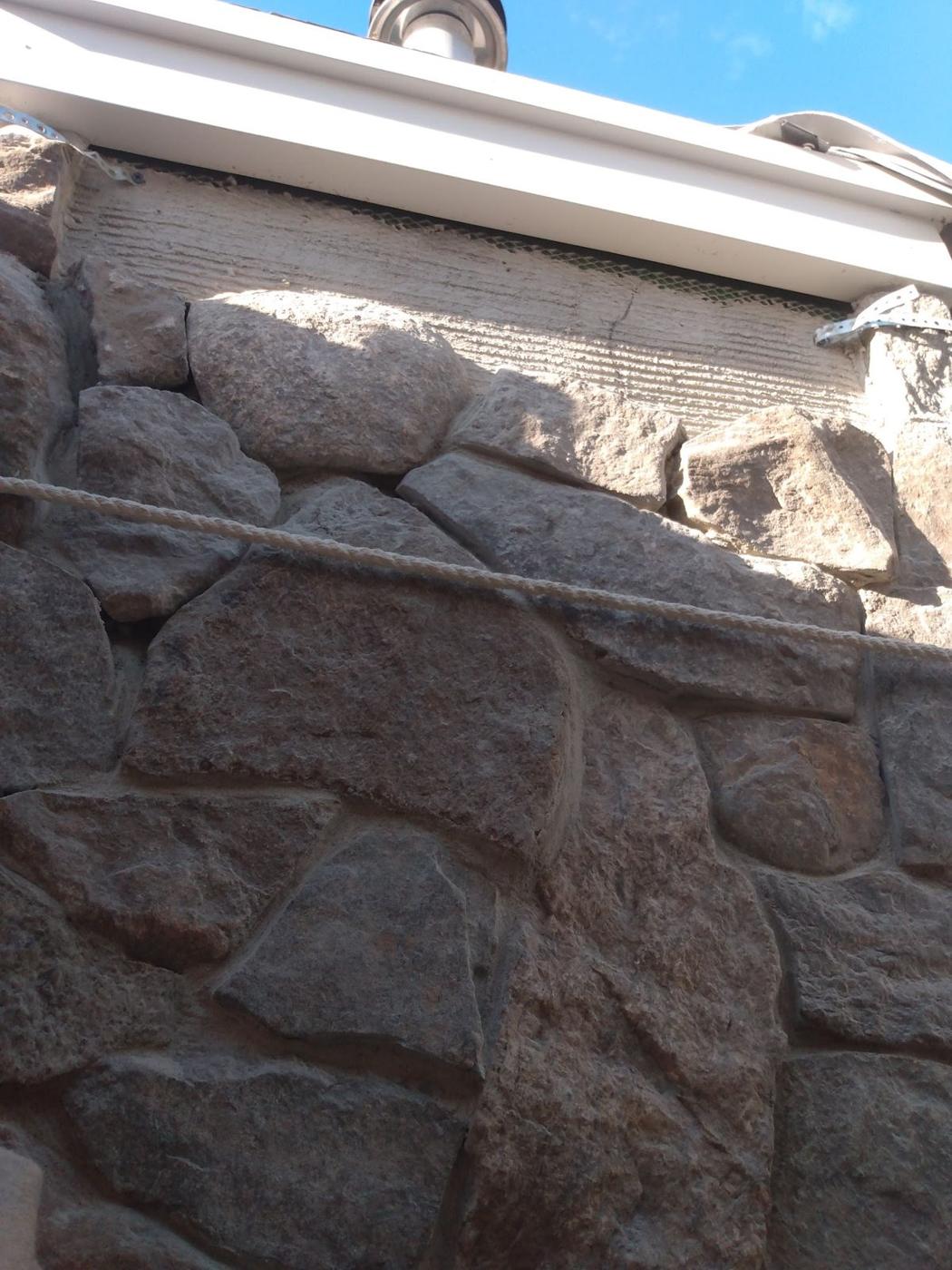
So the bottom of the stone gets the most attention. It sits clear of the ground, with a base detail that lets water drain out from behind the veneer. Flashing above decks, doors and windows keeps meltwater from getting behind the stone in the first place.
Ice dams are part of the same story. Water backing up at the eaves can find its way down inside a wall, so a stone job is a good time to look at the gutters and roof edge above it.
Inns, ski houses and farmhouses
Jackson has been a resort town since the 1800s. The Jackson Falls House opened in 1858, the Thorn Mountain House followed in 1869, and Wentworth Hall is still in business. Today there are ski houses near the Jackson cross country trails and year round homes on the hillsides.
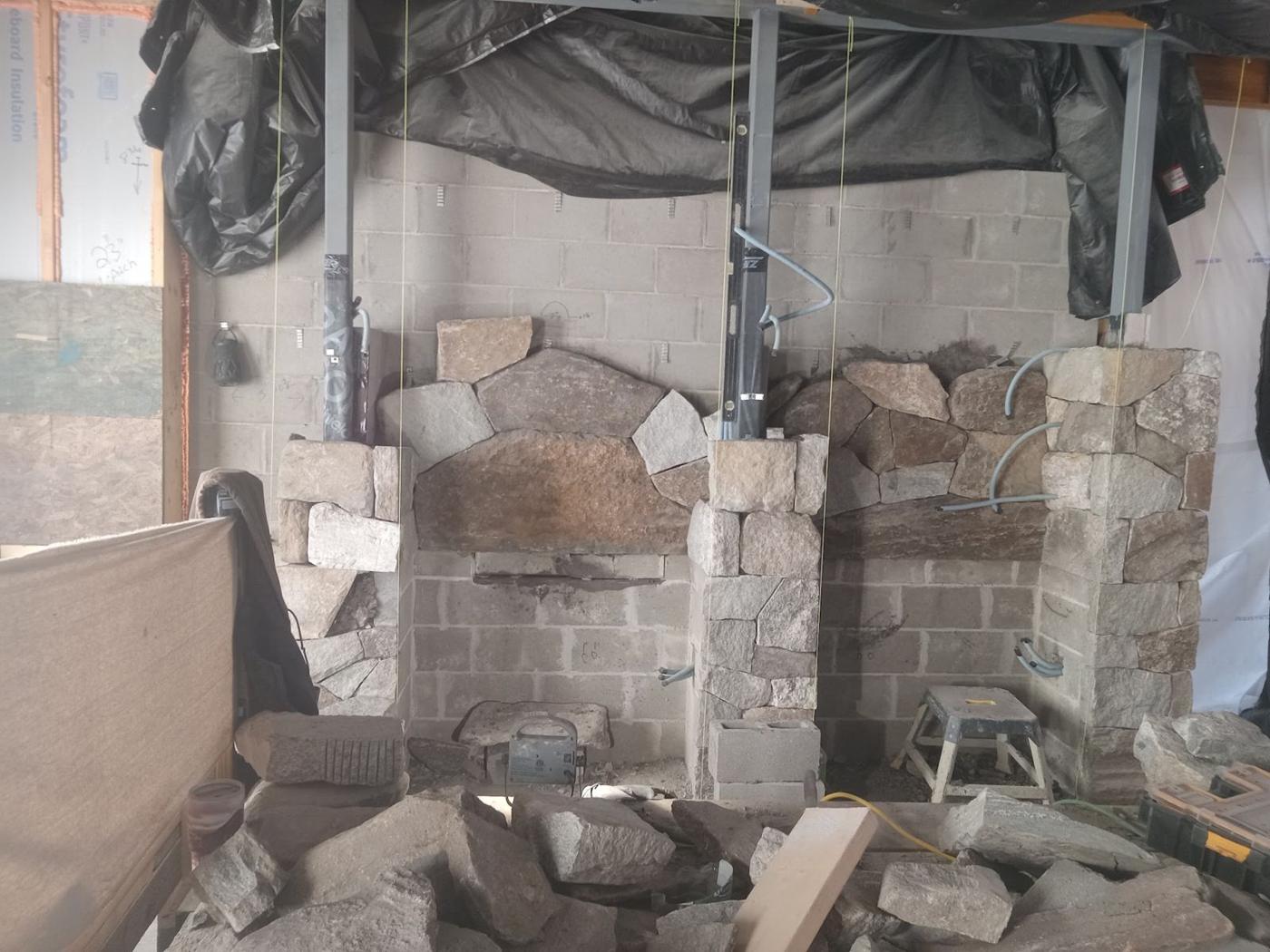
A stone fireplace wall in the main room. Fieldstone columns under a deck that faces the mountains. A stone base on a garage or entry. Those are the places veneer does the most in Jackson.
Other work in Jackson
A stone walkway from the driveway, steps that stay put through frost, a patio for summer, a fieldstone wall, or paint inside and out: those are on the table in Jackson too. Route 16 is the road up from Ossipee and the rest of the valley.