
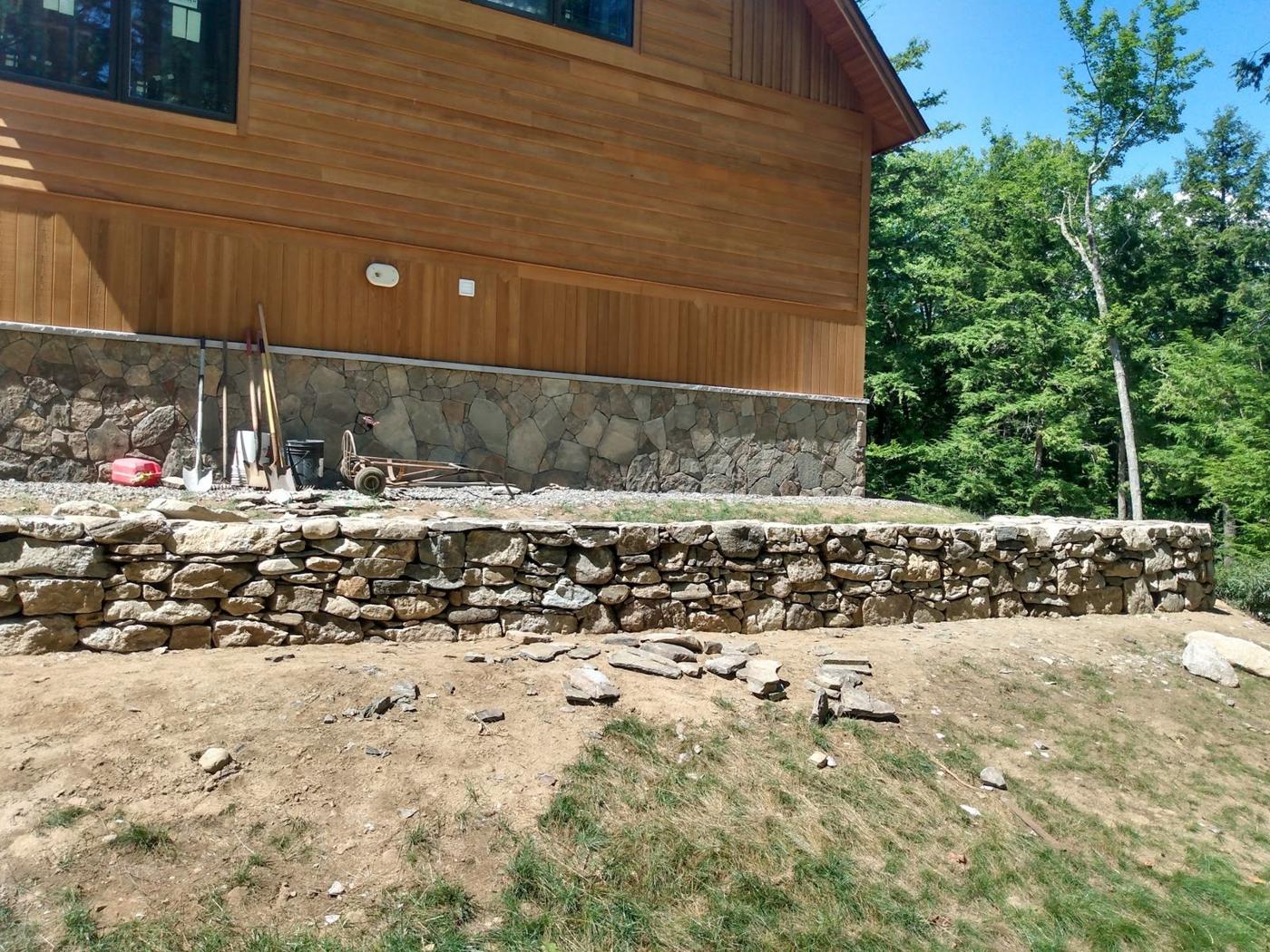
Cleaning it without hurting it
Most dirt comes off with water and a soft bristle brush. A little dish soap in a bucket takes care of grime and pollen. Wet the wall first, scrub, and rinse from the top down. Pick a cloudy day or work in the shade so soapy water doesn't dry on the stone.
Keep the pressure washer back. A strong jet can cut into mortar joints, and on adhered veneer it can loosen stones. Wire brushes leave bits of steel behind that rust and stain. Acid cleaners can etch some stone and eat into mortar, so save them for stubborn stains and try them first on a spot nobody looks at.
White powder on the stone
That white haze or crust is efflorescence. Water moving through the mortar and stone carries salts out to the face, the water dries, and the salts stay behind. It's common on new work while the mortar cures, and it often fades on its own.
Brush it off dry with a stiff nylon brush. Washing it just dissolves the salts and sends them back in. If it keeps showing up in the same place, water is getting in there, often from somewhere above.
Gutters, downspouts and sprinklers
The quickest way to stain and soak a stone wall is to aim water at it. A clogged gutter spilling onto a stone chimney. A downspout that empties at the foot of the veneer. A sprinkler that hits the foundation every morning. Each one keeps the stone, and the wall behind it, wet.
Clean the gutters in the fall once the leaves are down, run downspouts out away from the house, and turn sprinkler heads so they miss the stone.
A roof valley or a short downspout often turns out to be the cause. If one part of the wall is always darker than the rest after rain, follow the water up and you'll usually find where it's coming from.
Winter around the stone
Don't let plow piles or roof slides sit against the veneer. Shovel a gap. Keep rock salt off the stone and the steps beside it, since salty meltwater soaks in and does its damage as it dries. Sand or a gentler melt is easier on masonry.
Watch for ice dams on roofs above stone walls. That meltwater ends up running down the face of the stone or getting behind it.
Sealing: usually not needed
Most natural stone veneer doesn't need a sealer. Dense stone sheds water on its own, and the wall is built to let moisture dry back out.
If there is a reason, like a spot that stays wet or a light stone that stains, use a breathable water repellent. One stone maker's guide points to silane or siloxane based products and warns against acrylic or elastomeric sealers that form a film on the surface. A film can hold moisture in the stone, and that water freezes. Test any sealer on a small area first, because some darken the stone.
A once a year walk around
Spring is a good time, after the snow is gone. Walk the stone and look for:
- Cracked mortar joints, or stones that sound hollow when you tap them with a knuckle
- Any stone that's loose, tipped or missing
- Open caulk where stone meets windows, doors and trim
- The bottom edge, which should still sit above the soil, mulch and pavement
- Rust streaks or dark stains below roof lines and windows
- Moss or green growth that stays wet in the shade
When to get someone to look
Call someone who works with stone if stones are coming loose, if a section bulges out from the wall, if there's staining or rot inside the house behind the stone, or if a crack keeps getting longer. Those usually point to water or movement behind the veneer, and they cost more the longer they sit.