
Cold isn't the problem. Water is.
Stone doesn't mind cold. What hurts it is water that gets into a pore, a crack or a mortar joint and then freezes. Ice takes up more room than water, so it pushes. One freeze does nothing you'd notice. A New Hampshire winter swings above and below freezing again and again, and each swing works the same weak spots a little more.
Dense stone like granite takes on very little water, which is why it lasts. Trouble usually starts in the mortar joints and in whatever sits behind the stone. So nearly everything below is about two things: keeping water out, and giving the water that does get in a way back out.
What goes on the wall before the stone
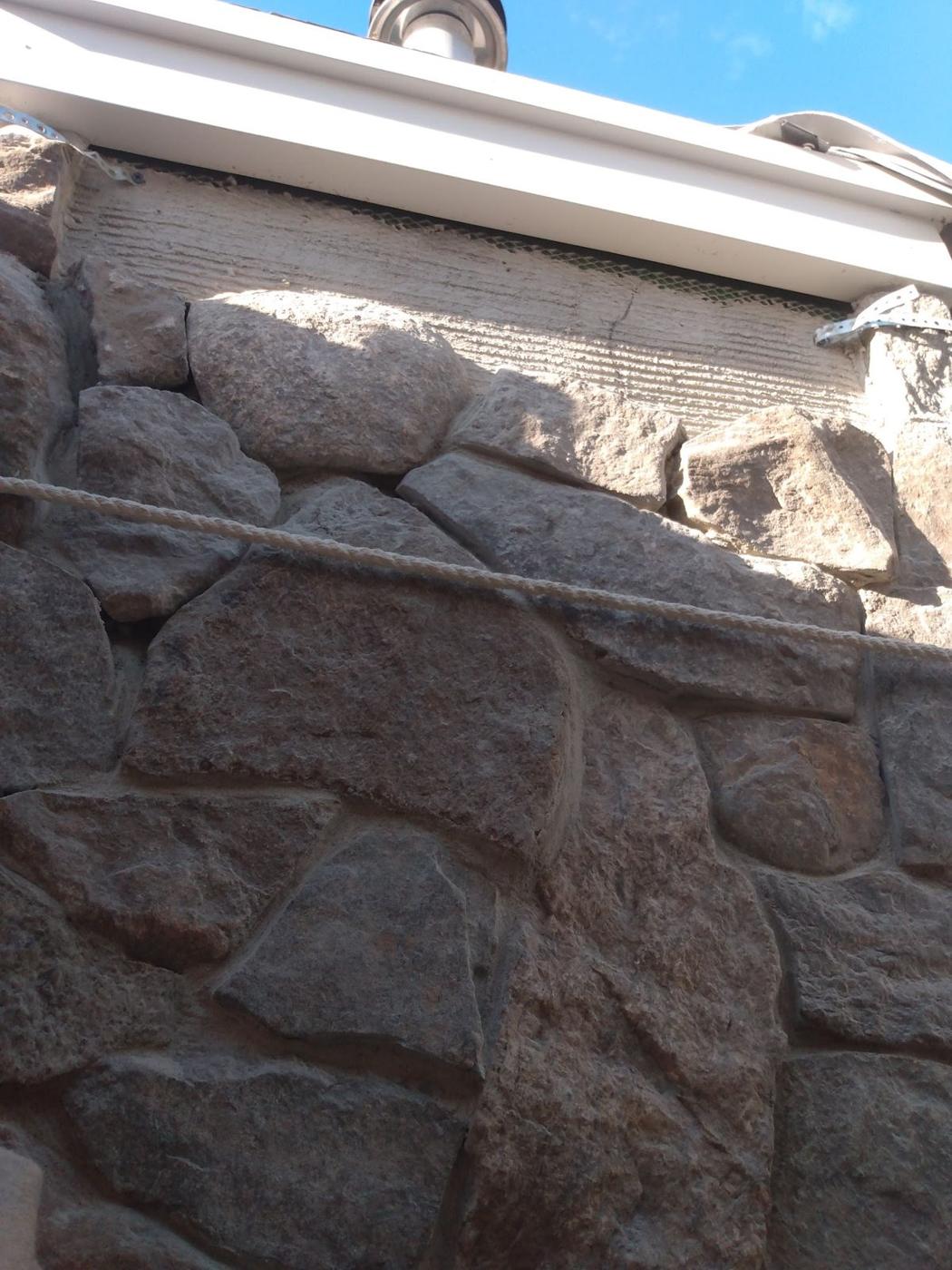
On a wood framed house, the stone never touches the sheathing. The usual order from the inside out is sheathing, a water resistant barrier, metal lath fastened into the studs, a scratch coat of mortar, then the stone in its own mortar bed. The photo at the top shows that scratch coat and the edge of the lath above the last row of stone, before the top course went on.
Many installers run two layers of barrier, or one layer plus a drainage mat, so water that gets past the stone has a path to run down instead of soaking into wood. In that way adhered veneer is built a lot like stucco. It's expected to get wet, and it's expected to drain.
The bottom of the wall
The bottom edge is where the water leaves. A metal or plastic weep screed runs along it so water behind the stone can drip out. That edge has to stay clear of the ground. One stone maker's installation guide calls for starting the first course 4 inches above soil or 2 inches above concrete, so the stone isn't wicking water up out of the dirt.
Over the years that gap tends to vanish. Mulch gets topped off, a patio goes in, a walkway gets raised. Then the screed is buried and the water has no exit. If your veneer runs right down into the ground, it's worth having someone look.
Snow counts too. A plow pile or a roof slide that leans on the veneer for weeks keeps the bottom soaked through every thaw.
Roofs, windows and decks
Many of the stone veneer repairs that turn into big bills trace back to one of these spots. A roof edge that sheds water straight down behind a stone wall can rot framing for years before anything shows outside.
- Kickout flashing where a roof edge runs into a stone wall, so roof water gets thrown away from the wall instead of down behind it
- Flashing over windows and doors, lapped so water runs out over it and not behind it
- Sealant, not mortar, in the gap between stone and window trim, since that joint moves
- Flashing and a gap where a deck ledger meets the house
- Gutters and downspouts that don't dump onto the stone
Mortar joints where it freezes
A joint that's packed full and tooled smooth sheds water better than one raked deep or left rough. One stone maker's installation guide says exactly that, and warns that joints much wider than half an inch tend to get shrinkage cracks.
The tight dry stack look, where stones touch and the mortar hides behind them, is popular. But the same guide steers people away from open joint work outdoors where freeze and thaw is common, because water sits in the gaps. Inside, on a fireplace wall, open joints are no problem.
Snow, plows and salt
Rock salt is hard on masonry. Salty meltwater soaks into the mortar and the stone, and as it dries the salt crystals grow inside the pores. You see a white crust first and flaking later. On steps, walkways and the bottom of veneer near a driveway, that adds up over the years.
Shovel first and use as little melt as you can. Some masonry restoration suppliers point people toward potassium chloride or magnesium chloride over rock salt and calcium chloride. Sand gives grip with no chemistry at all.
Building it in cold weather
Mortar needs time above freezing to set. If it freezes while it's still green, the bond suffers. So outdoor stone work in the dead of a New Hampshire winter either waits or gets tented and heated. Inside work, like a fireplace wall in a heated house, can go on any time of year.