Stone this state is made of
Farmers here spent generations clearing fieldstone out of their fields and stacking it along the edges. Those walls are still out in the woods, gray and brown and covered in lichen. A new fieldstone wall uses the same kind of stone, so it looks like it came out of the land rather than off a pallet.
Kevin builds with New Hampshire fieldstone and other natural stone, picked for shape as much as color. Round stone, flat stone and big boulders each make a different looking wall, and most good walls use some of each.
Dry laid or mortared
A dry laid wall has no mortar. The stones hold by weight, friction and how well they're fit. When the ground freezes and heaves, a dry wall shifts a little and settles back, and water runs right through it. That's why it's the usual choice for a wall out in the yard here.
A mortared wall looks crisper and can go up narrower and closer to plumb. But mortar turns the wall into one stiff piece, so it needs a footing below frost depth. Without one, frost lifts part of the wall and the mortar cracks along the line where it moved.
How a dry wall stays standing
None of this shows once the wall is done. It's still the difference between a wall that stays straight and one that slumps after a few winters.
- A trench below the topsoil with a compacted base of crushed stone
- The biggest stones on the bottom, set level, not tipped with the slope
- Each face leaning back a little as it rises, which masons call batter
- Joints crossed, one stone over two, so no seam runs straight up
- Long stones laid through the wall now and then to tie both faces together
- Small stone packed into the middle so nothing rocks
- Heavy, flat stones on top that stay put when someone sits on them
Caps and finished ends
The top course is what people see and touch most. A capped wall gets wide, flat stones across the top so it reads finished and the stones below stay locked in. Ends and corners get squared stones so the wall stops cleanly instead of trailing off into the grass.
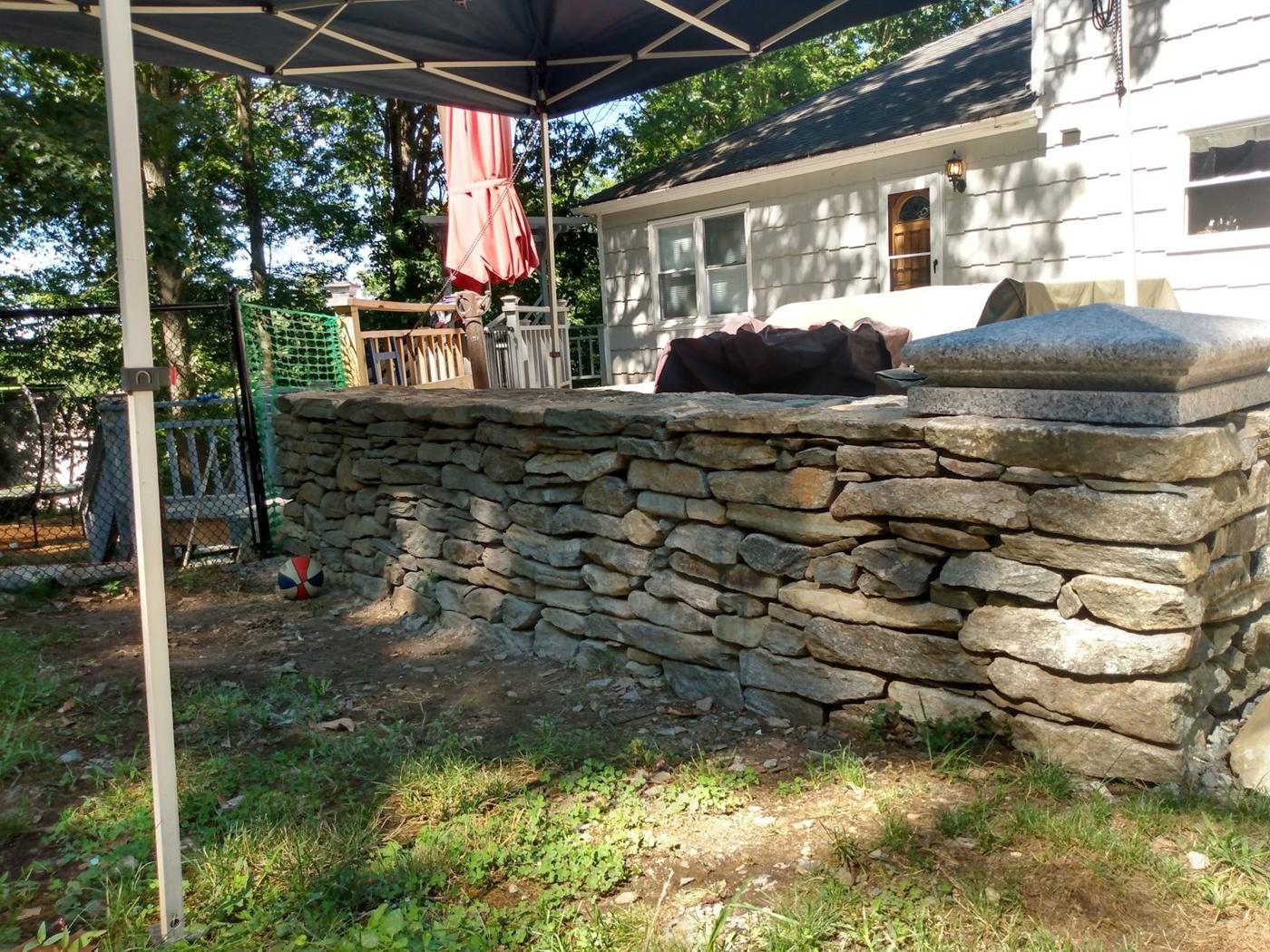
The wall in this photo is dry stacked flat stone with a granite post cap set on the end pillar.
Where people put them
On a lot that slopes, a wall often ends up holding back soil as well. That makes it a retaining wall, and it needs drainage stone behind it.
- Along a road or a property line
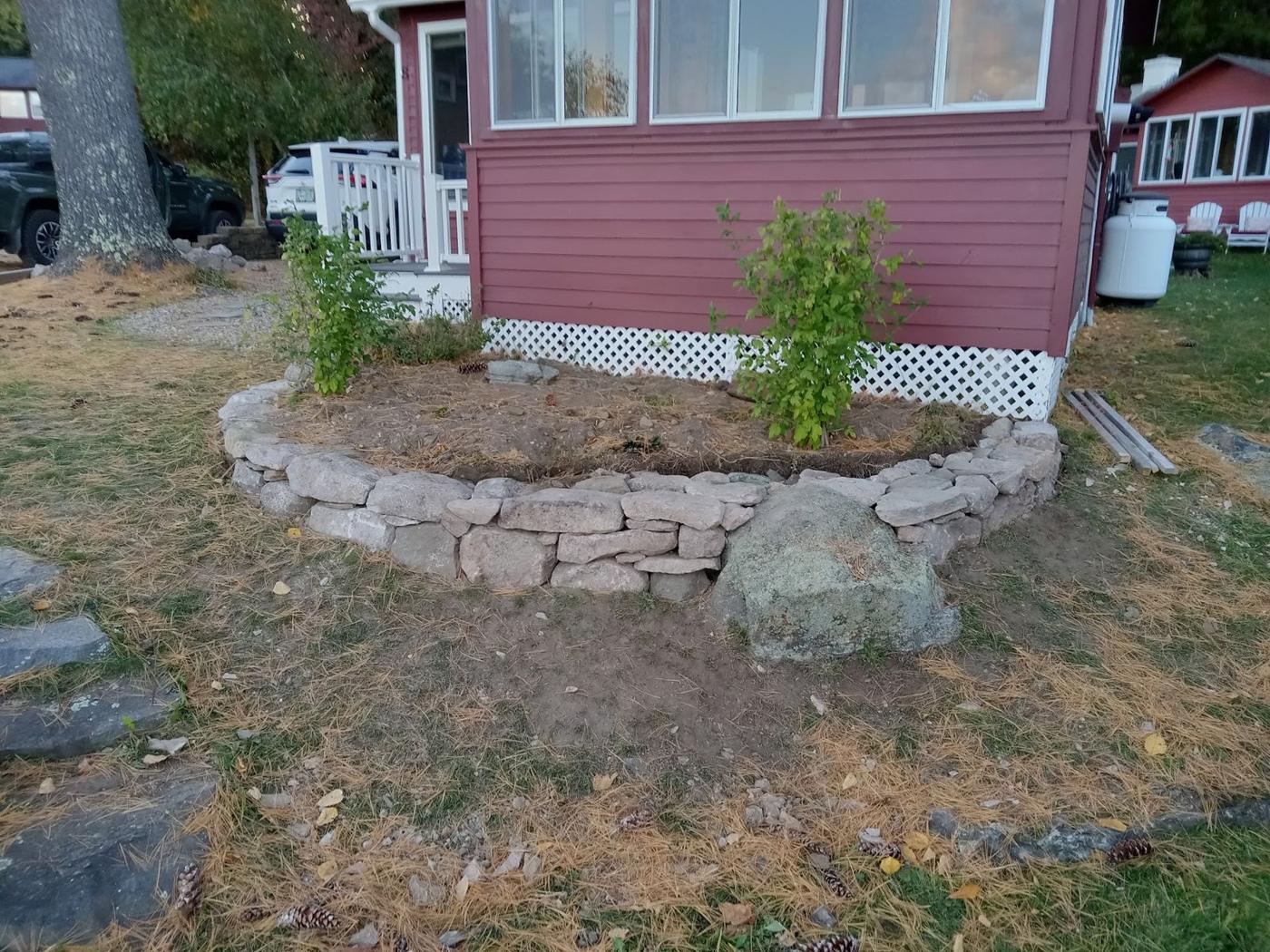
- Around garden beds, like the low ring in this photo
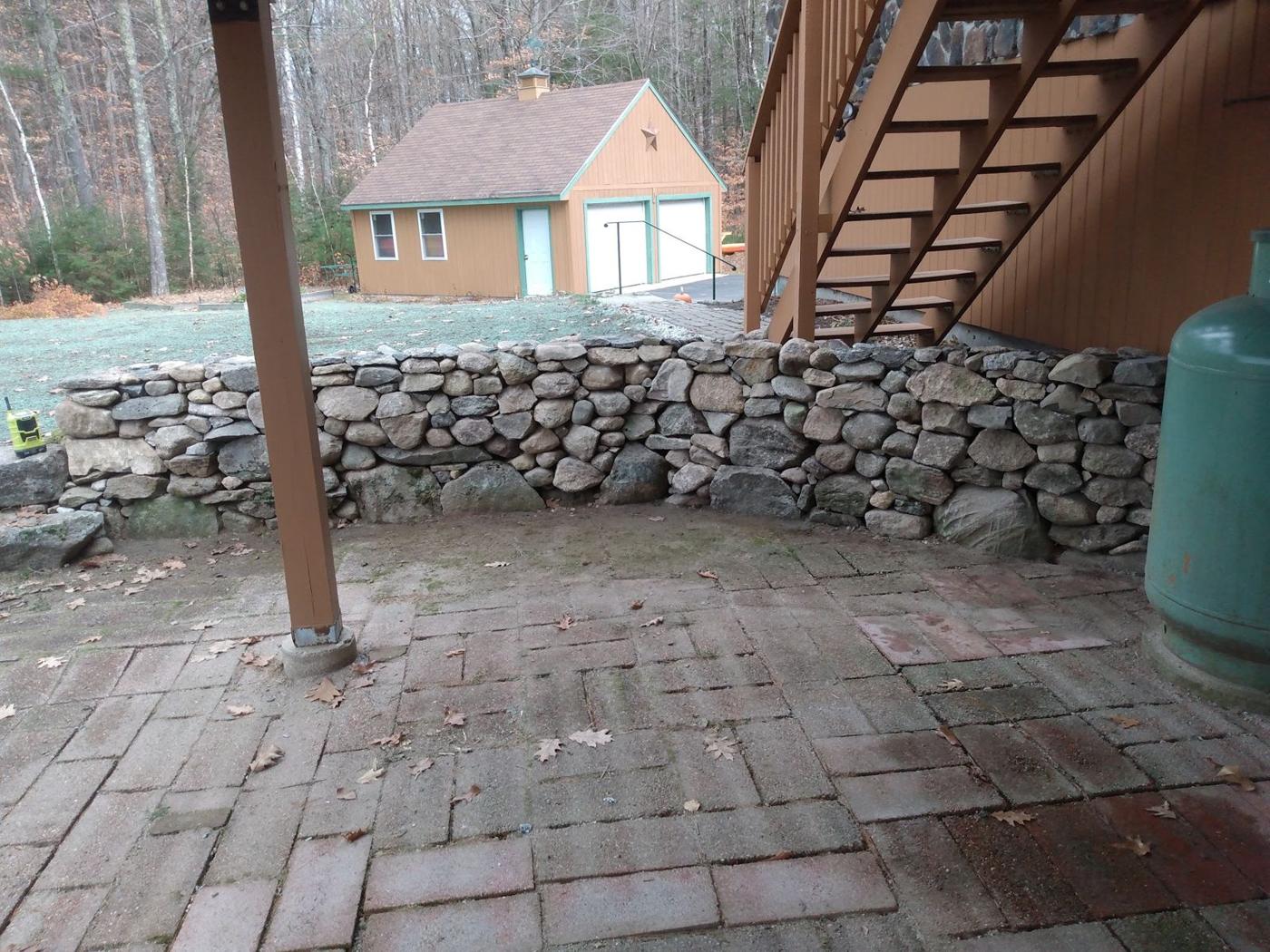
- Under a deck, to close in the space and hold the grade
- Around a big tree, with room left for the trunk
- Along a driveway or at its entrance
- As a low sitting wall at the edge of a patio