
Choosing the stone
Flagstone is the usual pick for a stone patio: flat, split stone in irregular pieces or cut to squares and rectangles. Irregular flags make a looser, more natural patio that fits a wooded lot. Cut stone in a pattern looks cleaner off a newer house. Granite and fieldstone flats work too, especially along the edges and at steps.
Look at the stone wet before you decide. Stone changes color after rain, and a patio by the lake spends a lot of its life wet.
Where it goes and how big
Start with how you'll use it. A table for six needs more room than people expect once the chairs push back. A grill wants space away from the siding. A fire pit wants distance from trees and the deck.
Then look at the ground: sun and shade, the view, how it connects to the door, and how much the yard slopes. A patio on a slope usually needs a wall on the low side and sometimes a few steps, which changes the job.
What keeps it flat
Like a walkway, a patio is mostly base. Topsoil out, the ground compacted, crushed stone built up in layers and tamped, then a setting bed for the stone. The finished surface gets a slight pitch away from the house so rain doesn't run toward the foundation or sit in puddles.
Frost is the real test. Water that collects under a patio freezes and lifts it unevenly. A base that drains is what keeps the stones level from one spring to the next.
Walls, steps and edges
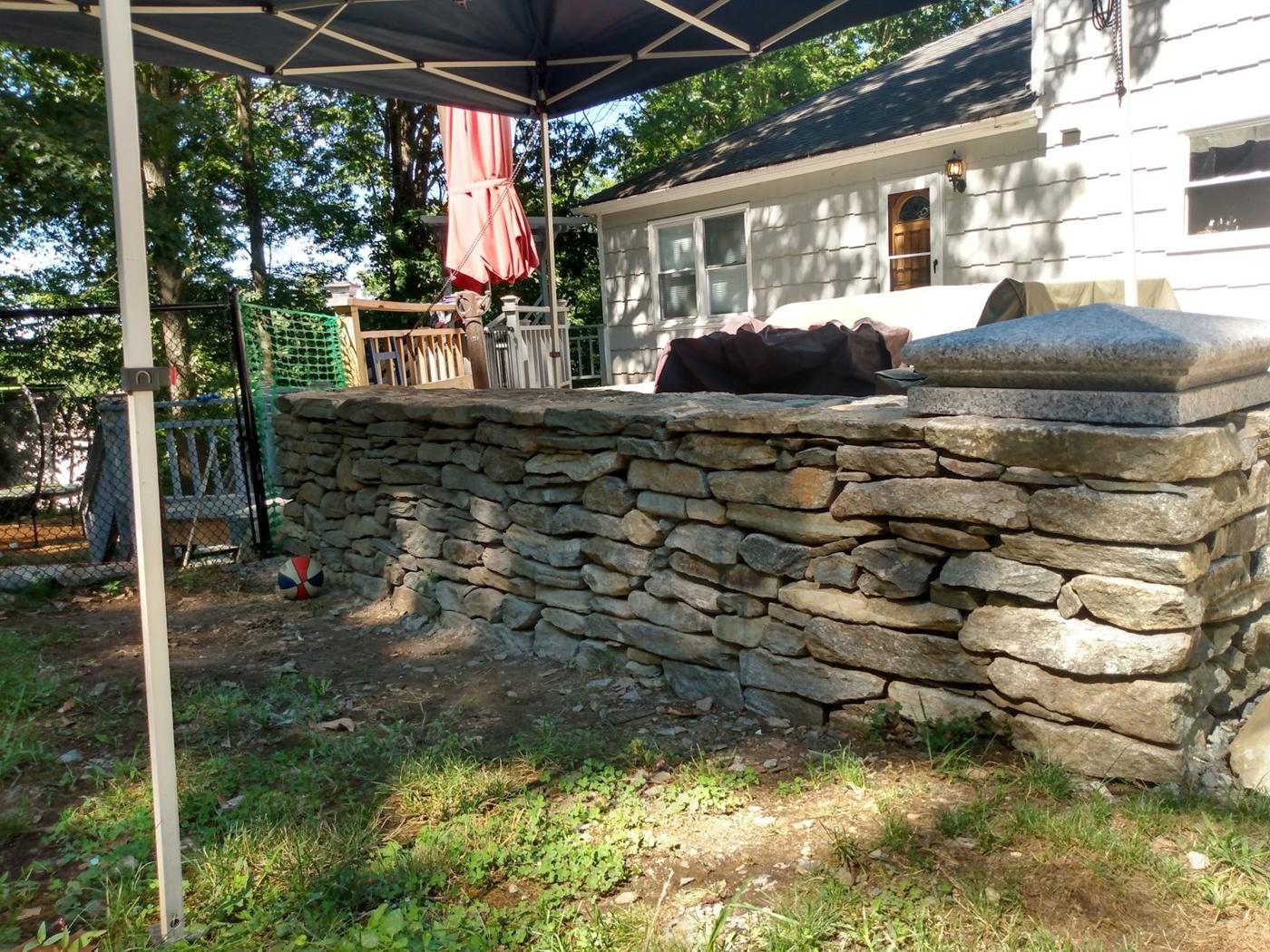
Patios often come with stone work around them. A low wall on the downhill side to hold the grade, a sitting wall along one edge, steps up to the deck or down to the yard. That's the same fieldstone and retaining wall work, tied into the patio so it reads as one piece of stone.
Edges matter more than they look. Without a solid edge, the outer stones slowly creep outward and tip.
Dry laid or mortared
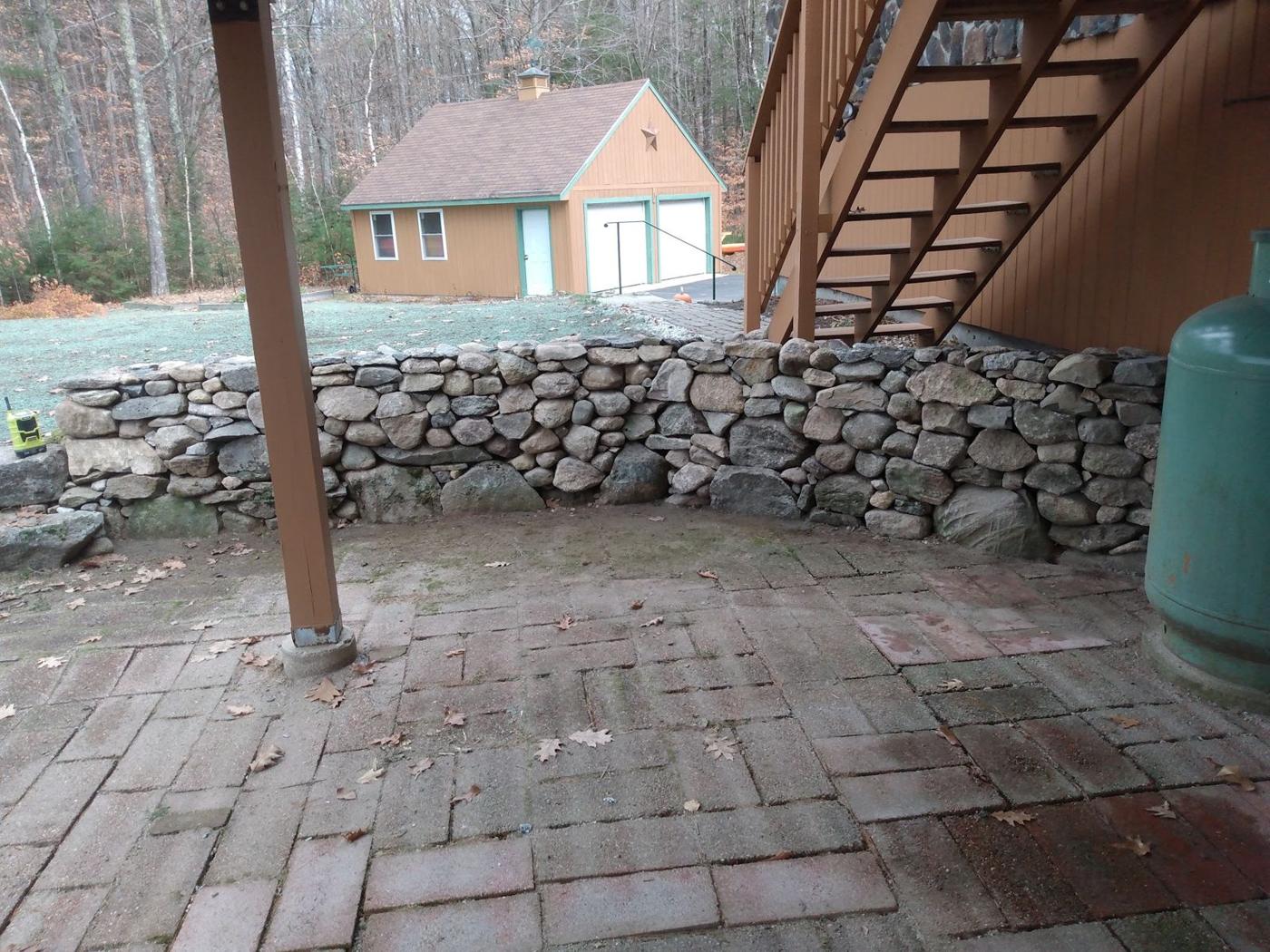
A dry laid patio, with gravel or polymeric sand in the joints, can move a little with frost and be reset a stone at a time. A mortared patio over a concrete slab looks the most finished and sweeps clean, but it depends on the slab staying put. In a New Hampshire freeze, a cracked slab means cracked joints across the top.
Patios near the lake
Patios count as impervious surface under New Hampshire's shoreland rules. Within 250 feet of a lake's reference line, adding one can need an NHDES permit, and lots that already have a lot of roof and pavement come with extra requirements. The first 50 feet from the water has the strictest rules of all.
If the patio you're picturing sits near the water, check with NHDES and your town first. Sometimes the design can move back from the shore or shrink a bit to fit.
Winter and upkeep
Shovel with a plastic blade if you can, and keep rock salt off natural stone. Sweep out leaves and pine needles in the fall so the joints don't fill with dirt and weeds. Gravel joints may need topping up now and then.